How to Learn Data Science in 2026: Courses, Skills, Tools
- Hawkins University
- Apr 11
- 6 min read

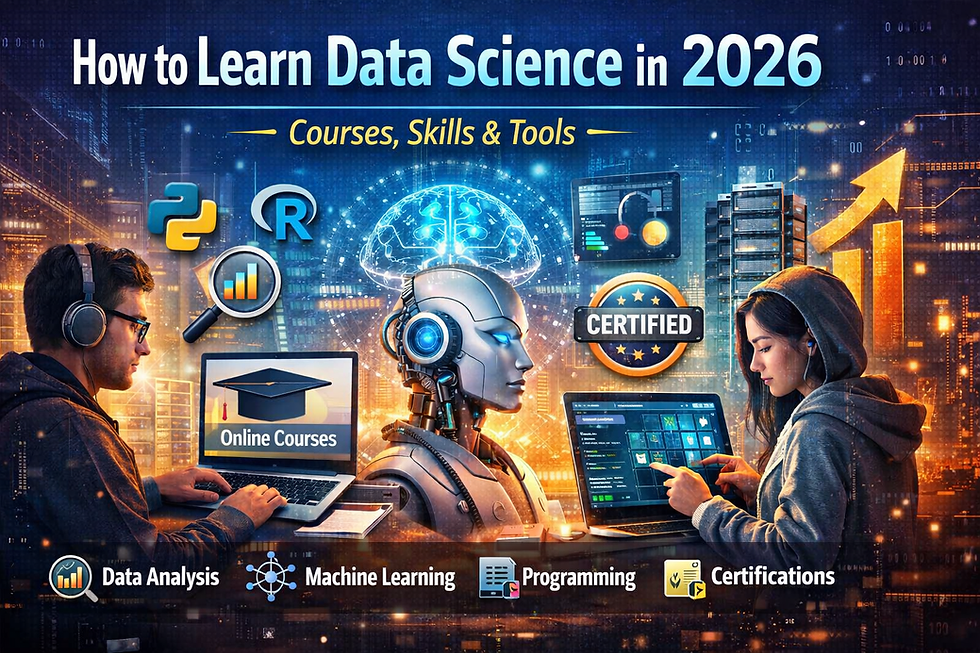
Data science has evolved into one of the most powerful and transformative fields in the digital world. In 2026, it continues to dominate industries by enabling organizations to make data-driven decisions, automate processes, and predict future trends with accuracy.
From healthcare and finance to e-commerce and entertainment, data science plays a crucial role in extracting meaningful insights from massive datasets. With the rise of artificial intelligence (AI), machine learning (ML), and big data technologies, the demand for skilled data professionals is higher than ever.
If you’re planning to learn data science in 2026, this guide will walk you through everything—from essential skills to the best courses and tools you need to succeed.
Why Data Science Is One of the Most In-Demand Skills
Data science is no longer just a niche field—it’s a core business requirement. Companies across the globe rely on data scientists to make strategic decisions and gain a competitive edge.
Key Reasons for High Demand:
Data Explosion: Every second, massive amounts of data are generated from social media, IoT devices, and digital platforms.
Business Intelligence: Companies use data to understand customer behavior and improve services.
Automation & AI: Data science fuels machine learning models and automation systems.
Cross-Industry Demand: Data science is required in healthcare, fintech, retail, logistics, and more.
Career Growth Opportunities:
Roles such as Data Analyst, Data Scientist, Machine Learning Engineer, and AI Specialist offer excellent career prospects with competitive salaries.
Key Trends Shaping Data Science in 2026
The data science landscape is constantly evolving. Understanding current trends can help you stay ahead in your learning journey.
Top Trends to Watch:
AI Integration Everywhere: AI-powered solutions are being embedded in almost every application.
Auto ML (Automated Machine Learning): Simplifies model building for beginners.
Edge Computing: Data processing is moving closer to the source.
Data Privacy & Ethics: Stronger regulations and ethical practices are becoming essential.
Generative AI: Tools like AI models are revolutionizing data analysis and content creation.
Staying updated with these trends ensures that your skills remain relevant in 2026 and beyond.
Step-by-Step Roadmap to Learn Data Science
Learning data science can feel overwhelming, but following a structured roadmap makes it manageable.
Step 1: Understand the Basics
Start with fundamental concepts like data types, variables, and basic statistics.
Step 2: Learn Programming
Focus on languages like Python or R for data analysis.
Step 3: Study Mathematics & Statistics
Learn probability, linear algebra, and statistical methods.
Step 4: Data Handling & Visualization
Understand how to clean, process, and visualize data using tools.
Step 5: Machine Learning
Learn supervised and unsupervised learning techniques.
Step 6: Work on Projects
Apply your knowledge to real-world datasets.
Step 7: Build a Portfolio
Showcase your projects to demonstrate your skills.
Following this roadmap ensures a solid foundation and practical expertise.
Essential Skills Required for Data Science
To succeed in data science, you need a mix of technical and soft skills.
Technical Skills:
Programming (Python, R, SQL)
Data visualization
Machine learning algorithms
Data cleaning and preprocessing
Big data technologies
Analytical Skills:
Problem-solving
Critical thinking
Statistical analysis
Soft Skills:
Communication skills
Business understanding
Storytelling with data
Mastering these skills will make you job-ready and help you stand out in the competitive job market.
Top Programming Languages for Data Science (Python, R, SQL)
Programming is the backbone of data science. Here are the top languages you should learn:
Python
Most popular language for data science
Easy to learn and versatile
Libraries: Pandas, NumPy, Scikit-learn, TensorFlow
R
Ideal for statistical analysis and data visualization
Widely used in academia and research
SQL
Essential for database management
Helps in extracting and manipulating data
Which One Should You Start With?
Beginners should start with Python due to its simplicity and wide adoption.
Best Data Science Courses in 2026 (Online & Offline)
Choosing the right course is crucial for structured learning.
Top Online Courses:
Data Science Specializations
Machine Learning programs
Professional certification programs
Offline Programs:
University degrees (Bachelor’s/Master’s in Data Science)
Bootcamps and training institutes
What to Look for in a Course:
Industry-relevant curriculum
Hands-on projects
Certification
Placement support
A good course can significantly accelerate your learning journey.
Free vs Paid Data Science Courses: Which One to Choose?
Both free and paid courses have their advantages.
Free Courses:
Budget-friendly
Good for beginners
Limited depth and support
Paid Courses:
Structured learning path
Mentorship and guidance
Certifications and career support
Best Choice?
Start with free resources, then invest in paid courses for advanced learning and career growth.
Top Platforms to Learn Data Science (Coursera, Udemy, edX, etc.)
Several platforms offer high-quality data science courses.
Popular Learning Platforms:
Coursera: University-level courses and certifications
Udemy: Affordable and practical courses
edX: Professional and academic programs
Kaggle: Practice datasets and competitions
Data Camp: Interactive learning experience
These platforms provide flexible learning options for beginners and professionals alike.
Must-Have Data Science Tools & Technologies
To become a successful data scientist, you need to master essential tools.
Data Analysis Tools:
Python (Pandas, NumPy)
R programming
Visualization Tools:
Tableau
Power BI
Matplotlib, Seaborn
Machine Learning Tools:
Scikit-learn
TensorFlow
PyTorch
Big Data Technologies:
Hadoop
Spark
Other Essential Tools:
Jupy ter Notebook
Excel
Git & GitHub
These tools help you analyze, visualize, and model data efficiently.
Read More Details Here: How to Learn Data Science in 2026: Courses, Skills & Tools
Importance of Mathematics & Statistics in Data Science
Mathematics and statistics form the backbone of data science. Without a solid understanding of these concepts, it becomes difficult to analyze data or build accurate models.
Key Areas to Focus On:
Probability: Helps in making predictions and handling uncertainty
Statistics: Used for data analysis and hypothesis testing
Linear Algebra: Important for machine learning algorithms
Calculus: Helps in optimization and model training
Even though modern tools simplify calculations, a strong conceptual understanding gives you an edge and helps you interpret results effectively.
How to Build a Strong Data Science Portfolio
A strong portfolio is essential to showcase your skills and stand out in job applications.
Tips to Build an Impressive Portfolio:
Work on real-world datasets
Create diverse projects (analysis, visualization, ML models)
Upload your work on GitHub
Write clear documentation for each project
Highlight business impact and insights
Your portfolio acts as proof of your expertise and can often matter more than certifications.
Real-World Projects for Data Science Beginners
Hands-on projects are the best way to learn data science practically.
Beginner-Friendly Project Ideas:
Sales data analysis
Customer segmentation
Movie recommendation system
Stock price prediction
Social media sentiment analysis
Why Projects Matter:
Improve problem-solving skills
Build confidence
Enhance your resume
Prepare you for real industry challenges
Working on projects bridges the gap between theory and practical application.
Certifications That Boost Your Data Science Career
Certifications can validate your skills and improve your credibility in the job market.
Popular Certifications:
Data Science Professional Certificates
Machine Learning certifications
Cloud-based data certifications
Benefits of Certifications:
Adds value to your resume
Demonstrates commitment to learning
Helps in career transitions
Improves job opportunities
While certifications are helpful, combining them with practical experience is essential for long-term success.
Common Mistakes to Avoid While Learning Data Science
Many beginners make mistakes that slow down their progress.
Avoid These Common Errors:
Skipping fundamentals (math and statistics)
Focusing too much on theory without practice
Trying to learn everything at once
Ignoring real-world projects
Not building a portfolio
Pro Tip:
Focus on consistency and practical learning rather than perfection.
How Long Does It Take to Learn Data Science?
The time required to learn data science depends on your background, dedication, and learning approach.
Estimated Timeline:
Beginner Level: 3–6 months
Intermediate Level: 6–12 months
Advanced Level: 12–18 months
Factors That Affect Learning Time:
Prior programming knowledge
Daily study time
Hands-on practice
Learning resources
With consistent effort, you can become job-ready within a year.
Career Opportunities After Learning Data Science
Data science opens doors to a wide range of career opportunities.
Top Job Roles:
Data Scientist
Data Analyst
Machine Learning Engineer
Business Analyst
AI Engineer
Industries Hiring Data Professionals:
Healthcare
Finance
E-commerce
IT & Software
Marketing & Advertising
The demand for skilled data professionals continues to grow globally.
Salary Trends for Data Science Professionals in 2026
Data science remains one of the highest-paying career fields.
Average Salary Insights:
Entry-Level: Competitive starting salaries
Mid-Level: Significant growth with experience
Senior-Level: High-paying leadership roles
Factors Influencing Salary:
Skills and expertise
Location
Industry
Certifications and experience
Professionals with strong technical and analytical skills can earn premium salaries.
Tips to Stay Updated in the Data Science Field
Data science is constantly evolving, so staying updated is crucial.
Best Ways to Stay Updated:
Follow industry blogs and experts
Participate in online communities
Join data science forums
Attend webinars and workshops
Practice on platforms like Kaggle
Continuous learning ensures long-term success in your career.
Future Scope of Data Science in the Next Decade
The future of data science looks incredibly promising.
What to Expect:
Increased use of AI and automation
Growing demand across industries
More advanced tools and technologies
Expansion into new domains like climate science and space research7
Data science will continue to shape the future of technology and business, making it a future-proof career choice.
Read More Details Here: How to Learn Data Science in 2026: Courses, Skills, Tools


Comments